
Google Ads vs. Google Maps: Where Should a Local Business Spend First? (2026)
Here's something most local business owners don't know: Google quietly increased ad placements inside the local map pack by 733% between November 2025 and January 2026 (PPC Land, 2026). That "free" visibility on Google Maps? It's shrinking fast.
So if you've got a limited budget, where should your first marketing dollar go: paying for Google Ads clicks, or optimizing your Google Business Profile to show up in the map pack organically?
We've helped dozens of local businesses answer this exact question. This guide breaks down the real costs, click-through rates, trust factors, and timelines for both options, backed by 2025-2026 data. You'll walk away knowing exactly which investment makes sense for your situation.
Key Takeaways
- Local Pack #1 earns 17.6% CTR vs. 2.1% for the top paid ad (First Page Sage, 2025)
- Average Google Ads CPC hit $5.26 in 2025, up 12.9% year-over-year
- 68% of searchers trust map pack listings vs. only 10% for paid ads
- Most businesses under $1,000/month should optimize Google Business Profile first, then layer Ads on top
Quick Comparison: Google Ads vs. Google Maps at a Glance
| Category | Google Ads | Google Maps (GBP) |
|---|---|---|
| Cost | $2.05-$8.58 avg CPC by industry | Free (time or agency fee) |
| Time to Results | Same day | 3-6 months |
| CTR (Position #1) | 2.1% | 17.6% |
| Searcher Trust | 10% | 68% |
| Stops Working When... | Budget runs out | Never (compounds) |
| Best For | Immediate leads, new businesses | Long-term visibility, established businesses |
| Monthly Budget Needed | $500-$2,000+ | $0-$500 (optimization time) |
| Our Verdict | Wins on speed | Wins on ROI |
We've seen businesses waste thousands on Ads when a $300 GBP optimization would have delivered better results. We've also seen new businesses nearly close because they waited six months for organic visibility instead of running Ads from day one. Context matters. Let's look at the numbers.
How Much Does Each Option Actually Cost?
The average Google Ads click costs $5.26 across all industries, a 12.9% jump from last year (WordStream, 2025). But that average masks huge variation. A restaurant click costs $2.05. A legal services click costs $8.58. Your industry determines whether Ads are affordable or a money pit.
Here's what local businesses actually pay per click:
Let's put that in real terms. If you're a dentist spending $1,000 per month on Google Ads at $7.85 per click, you're getting about 127 clicks. With a 9.08% conversion rate (WordStream, 2025), that's roughly 12 leads per month. Not bad, but not exactly cheap either.
Google Maps optimization, by contrast, costs nothing if you do it yourself. Claim your Google Business Profile, fill out every field, upload photos weekly, and respond to reviews. That's free. If you hire an agency, expect $300 to $500 per month for ongoing GBP management. Either way, it's a fraction of most Ads budgets.
Here's the catch, though. Fifty-two percent of small businesses spend under $1,000 per month on all marketing combined (LocaliQ, 2026). At that budget, every dollar matters. So which channel gives you more bang for the buck?
Which Drives More Clicks: Paid Ads or the Map Pack?
The top position in Google's Local Pack earns a 17.6% click-through rate, while the top paid ad gets just 2.1% (First Page Sage, 2025). That's an 8x difference. Even the third map pack position (15.1%) crushes the best-performing ad.
Why the massive gap? Because 70-80% of searchers skip paid ads entirely and scroll straight to the map pack (Jumper Media, 2025). People searching "plumber near me" or "best pizza downtown" aren't in shopping-around mode. They want a nearby, trusted business right now. The map pack answers that instantly.
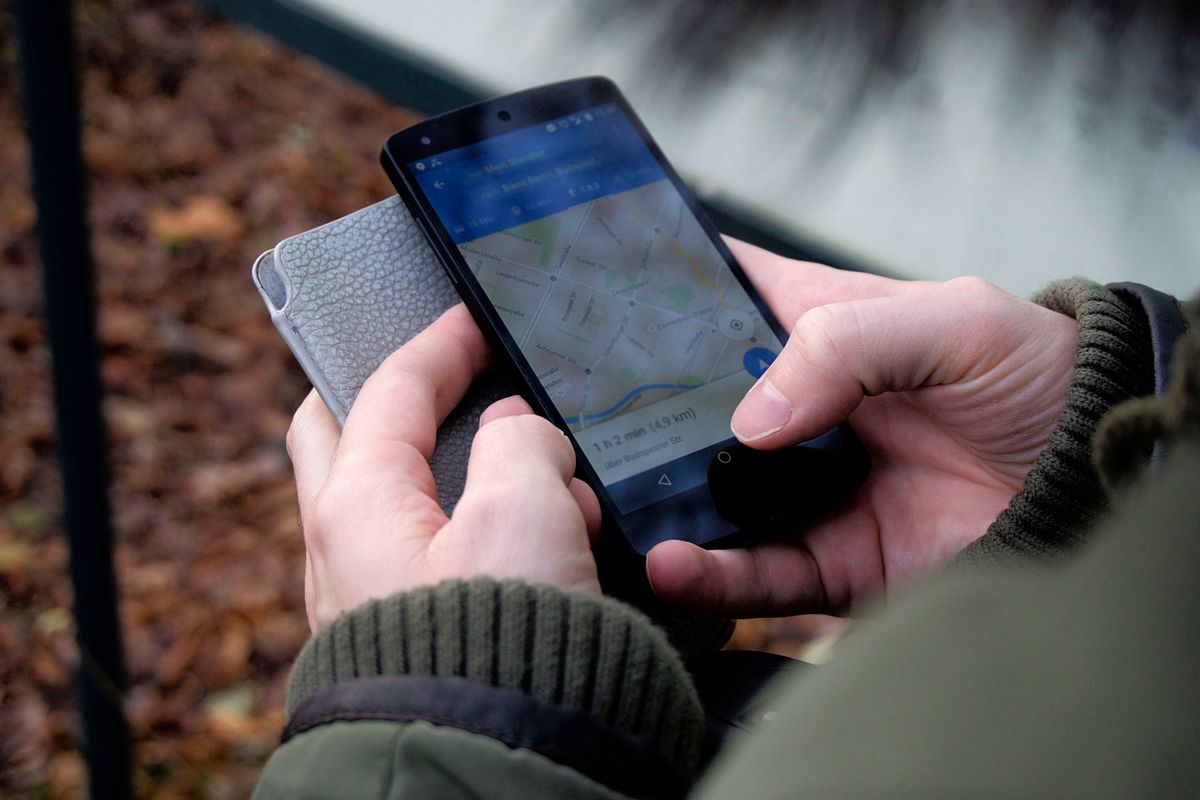
Does that mean Ads are useless? Not at all. Ads show up above the map pack. For competitive industries like legal or home services, that top-of-page visibility still captures high-intent clicks. But if you can only afford one channel, the CTR data strongly favors the map pack.
According to First Page Sage's 2025 meta-analysis, the top Local Pack position delivers 8.4 times more clicks than the top paid ad position, making Google Business Profile optimization one of the highest-ROI marketing activities available to local businesses today.
Do Customers Trust Ads or Map Listings More?
Sixty-eight percent of searchers trust Local Pack listings compared to just 10% who trust paid ads (Jumper Media, 2025). That trust gap isn't just a vanity metric. It directly affects whether someone calls your business or keeps scrolling.
Why do map listings earn more trust? Reviews. Star ratings. Photos from real customers. A map listing feels like a recommendation from the community. An ad feels like, well, an ad.
And those reviews pack a serious punch. Improving your Google star rating by just one star increases calls, website clicks, and direction requests by 44% (BrightLocal, 2025). Each additional review adds an estimated 80 more website visits, 63 direction requests, and 16 phone calls per year.
So where do those GBP clicks actually lead? Here's the breakdown:
Nearly half of all GBP interactions drive website traffic. Another third send people directly to your front door via directions. That's not "awareness." That's foot traffic and phone calls from people ready to buy.
BrightLocal's 2025 GBP Insights Study found that 48% of Google Business Profile interactions result in website clicks, while 34% generate direction requests and 17% produce phone calls, making GBP one of the most action-oriented marketing channels for local businesses.
How Fast Do You Need Results?
Forty-six percent of all Google searches have local intent (Google/Search Engine Roundtable, 2018/2025). That's a massive audience. But the timeline for reaching them differs drastically between Ads and Maps.
Google Ads delivers leads from day one. Set up a campaign in the morning, get calls by afternoon. That immediacy is genuinely valuable when you need revenue now. A new restaurant opening, a plumber entering a new market, a seasonal business ramping up, these situations demand speed.
Google Maps optimization works differently. It takes three to six months of consistent effort before you'll see meaningful movement in the local pack. You need to fill out your profile completely, post updates regularly, earn reviews, and build local citations. The payoff is slower but compounds over time.
Here's the critical difference. When you stop paying for Ads, leads stop instantly. When you stop actively optimizing your GBP, you don't lose your position overnight. Reviews stay. Your listing stays. The momentum you built keeps working for months.
And here's a stat that matters for both channels: 76% of consumers who search "near me" on their phone visit a business within a day (Google/Backlinko, 2025). Whether they find you through an ad or the map pack, the intent is there. The question is just which channel gets you in front of them more cost-effectively.
The 733% Problem: Why Free Maps Visibility Is Shrinking
Google increased local pack ad placements from fewer than 3% of keywords to roughly 22% in just three months, November 2025 through January 2026 (PPC Land, 2026). That's a 733% jump. And it signals something important for every local business owner.
The map pack used to be almost entirely organic. Three businesses earned those spots through reviews, proximity, and profile quality. Now, paid advertisers are increasingly buying their way in. The three organic spots still exist, but they're competing with paid placements for attention.
What does this mean for your strategy? If you haven't optimized your GBP yet, the window of easy organic visibility is closing. Businesses that lock in strong map pack positions now build a moat. They'll have the reviews, the engagement history, and the relevance signals that newcomers can't buy overnight.
But it also means Google Ads in the map pack are becoming a real option. If your competitors are already dominating the organic spots, a map pack ad might be your fastest path to visibility. Google clearly wants more ad revenue from local search. Fighting that trend isn't a strategy.
Who Should Choose What?
If you need leads this week and you're a new business, start with Google Ads. Set a modest daily budget, target your core service keywords, and generate calls immediately. You can't wait six months for organic rankings when you've got rent due.
New businesses needing immediate leads: Start with Google Ads. Set a $20-$30/day budget on your highest-intent keywords. Use the revenue to fund GBP optimization in parallel.
Established businesses spending under $1,000/month: Prioritize Google Business Profile. You already have some reviews and history. A focused optimization effort will compound faster than spreading a thin budget across paid clicks.
Businesses with $2,000+/month marketing budget: Run both simultaneously. Allocate roughly 60% toward GBP optimization and content, 40% toward Ads. Use Ads to fill gaps while organic visibility builds.
Seasonal businesses (landscaping, tax prep, HVAC): Run Ads during peak season when demand spikes. Invest in GBP optimization during the off-season so you're positioned when the next peak hits.

If neither option fits your situation, consider that 45% of small businesses already use search advertising and 53% invest in SEO (LocaliQ, 2026). You're not choosing between cutting-edge tactics. You're choosing which proven channel to prioritize first.
Need help deciding? We build custom Google Ads + Maps strategies for local businesses based on your industry, budget, and timeline. [Get a free local visibility audit from AI Marketing Agency.]
Frequently Asked Questions
Can I run Google Ads and optimize Google Maps at the same time?
Yes, and most successful local businesses eventually do both. Forty-five percent of small businesses use paid search while 53% invest in SEO simultaneously (LocaliQ, 2026). Start with whichever matches your timeline, then layer in the second channel as budget allows. The two channels reinforce each other. The mechanism: Google Ads buys you immediate visibility for high-intent queries while Google Maps ranking compounds organically over time, so they're complementary rather than competing — Ads pay back this month while Maps pay back over years. Businesses running both also benefit from a broader search results presence (an ad at the top, a map pack listing in the middle, an organic result below), which lifts brand recall and click-through across all three. The right next step: if you must pick one to start, choose Maps if you have 90+ days of patience, or Ads if you need bookings this month.
How long until Google Maps optimization starts working?
Most businesses see meaningful local pack movement within three to six months of consistent Google Business Profile optimisation. The timeline depends on your competition, review velocity, and how complete your profile is. Businesses in less competitive markets often see results faster. Seventy-six percent of "near me" searchers visit within a day (Backlinko, 2025), so once you rank, the traffic converts quickly. The mechanism: Google's local algorithm weights three primary signals — relevance (does your profile clearly describe what you do?), distance (how close are you to the searcher?), and prominence (citations, reviews, web presence) — and prominence is the slowest to build because it requires sustained external signals from third-party sites and customers. Most movement happens between week 8 and week 16 once Google trusts the new activity pattern. The right next step: commit to monthly review velocity, weekly Google Posts, and 5-10 fresh photos every quarter — the activity pattern matters as much as the initial optimisation.
Are Google Ads worth it for small businesses with tiny budgets?
It depends on your industry. At $2.05 per click, a restaurant can get 240 clicks from a $500 monthly budget. But a law firm paying $8.58 per click gets only 58 clicks from the same budget (WordStream, 2025). If your cost-per-lead exceeds what a new customer is worth, Ads aren't sustainable. Check your industry's average CPC before committing. The mechanism: Google Ads operates on a real-time auction where high-CLV verticals (legal, dental, HVAC, insurance) bid up the per-click price beyond what most small budgets can absorb, while lower-CLV verticals (restaurants, retail, salons) leave more room for small spenders to compete. The decisive variable is your customer lifetime value divided by your average cost-per-lead — if the ratio is below 5:1, the channel is unsustainable at any budget. The right next step: pull your industry's average CPC from WordStream or Google's Keyword Planner before allocating ad spend, and only commit to Ads if a single closed customer pays back ten clicks or more.
What's the first thing I should do to show up on Google Maps?
Claim and fully complete your Google Business Profile. Fill out every single field — business description, categories, service areas, hours, attributes — and upload at least 10 high-quality photos. Businesses with complete profiles earn 7x more clicks than empty ones. Then ask your five happiest customers for reviews this week. Each review adds an estimated 80 website visits per year (BrightLocal, 2025). The mechanism: Google's local algorithm penalises incomplete profiles because gaps signal either inactive operation or low effort, both of which correlate with poor user experience. A fully-completed profile with active recent photos and a steady review trickle telegraphs "this business is real, currently operating, and worth showing" — which is exactly what the algorithm is trying to detect. The right next step: schedule one hour this week to fill every empty field, upload 10 fresh photos, and message your five happiest recent customers for reviews.
Is Google Business Profile really free?
The listing itself is 100% free. Google doesn't charge to create or maintain a Business Profile. The "cost" is your time: updating posts, responding to reviews, uploading photos, and answering questions. If you hire someone to manage it, expect $300-$500 per month. Even at agency rates, it's typically far cheaper than a competitive Google Ads budget. The mechanism behind the "free" label: Google monetises Maps through the Ads ecosystem (sponsored map pack listings, Local Service Ads), so giving away the underlying profile is a customer-acquisition strategy that funnels businesses toward paid placements once organic alone isn't enough. According to BrightLocal's 2024 GBP Insights Study, the average local business spends 3-5 hours/month maintaining their profile, which is the actual hidden cost. The right next step: track the time you spend on GBP for one month — if it consistently exceeds 5 hours, the math usually favours hiring a manager rather than continuing DIY.
Can I run Google Ads and optimize Google Maps at the same time?
Yes, and most successful local businesses eventually do both. Forty-five percent of small businesses use paid search while 53% invest in SEO simultaneously (LocaliQ, 2026). Start with whichever matches your timeline, then layer in the second channel as budget allows. The two channels reinforce each other.
How long until Google Maps optimization starts working?
Most businesses see meaningful local pack movement within three to six months of consistent GBP optimization. The timeline depends on your competition, review velocity, and how complete your profile is. Businesses in less competitive markets often see results faster. Seventy-six percent of "near me" searchers visit within a day (Backlinko, 2025), so once you rank, the traffic converts quickly.
Are Google Ads worth it for small businesses with tiny budgets?
It depends on your industry. At $2.05 per click, a restaurant can get 240 clicks from a $500 monthly budget. But a law firm paying $8.58 per click gets only 58 clicks from the same budget (WordStream, 2025). If your cost-per-lead exceeds what a new customer is worth, Ads aren't sustainable. Check your industry's average CPC before committing.
What's the first thing I should do to show up on Google Maps?
Claim and fully complete your Google Business Profile. Fill out every single field, including business description, categories, service areas, hours, and attributes. Upload at least 10 high-quality photos. Businesses with complete profiles earn 7x more clicks than empty ones. Then ask your five happiest customers for reviews this week. Each review adds an estimated 80 website visits per year (BrightLocal, 2025).
Is Google Business Profile really free?
The listing itself is 100% free. Google doesn't charge to create or maintain a Business Profile. The "cost" is your time: updating posts, responding to reviews, uploading photos, and answering questions. If you hire someone to manage it, expect $300-$500 per month. Even at agency rates, it's typically far cheaper than a competitive Google Ads budget.
The Verdict: Where Should You Spend First?
| Category | Winner |
|---|---|
| Cost Efficiency | Google Maps/GBP |
| Click-Through Rate | Google Maps/GBP |
| Customer Trust | Google Maps/GBP |
| Speed to Results | Google Ads |
| Long-Term ROI | Google Maps/GBP |
| Budget Flexibility | Google Ads |
| Overall (most local businesses) | Google Maps/GBP first |
For most local businesses, optimizing your Google Business Profile should come first. The data is clear: higher CTR, stronger trust, lower cost, and compounding returns. Layer Google Ads on top when you need immediate leads or want to dominate competitive keywords.
The businesses that win local search in 2026 won't choose one or the other. They'll start with the right one and build from there. With Google expanding map pack ads by 733%, the cost of waiting is going up every month.